
Concrete and Aggregate Construction Materials Testing

The Thrasher Group’s Construction Materials Testing (CMT) laboratories provide comprehensive testing and inspection services to help verify material quality, ensure compliance with project specifications, and support successful project delivery. Our CCRL- and AASHTO-accredited laboratories offer reliable testing of concrete, soils, aggregates, and other construction materials, backed by experienced technicians who provide both field and laboratory services throughout the region.

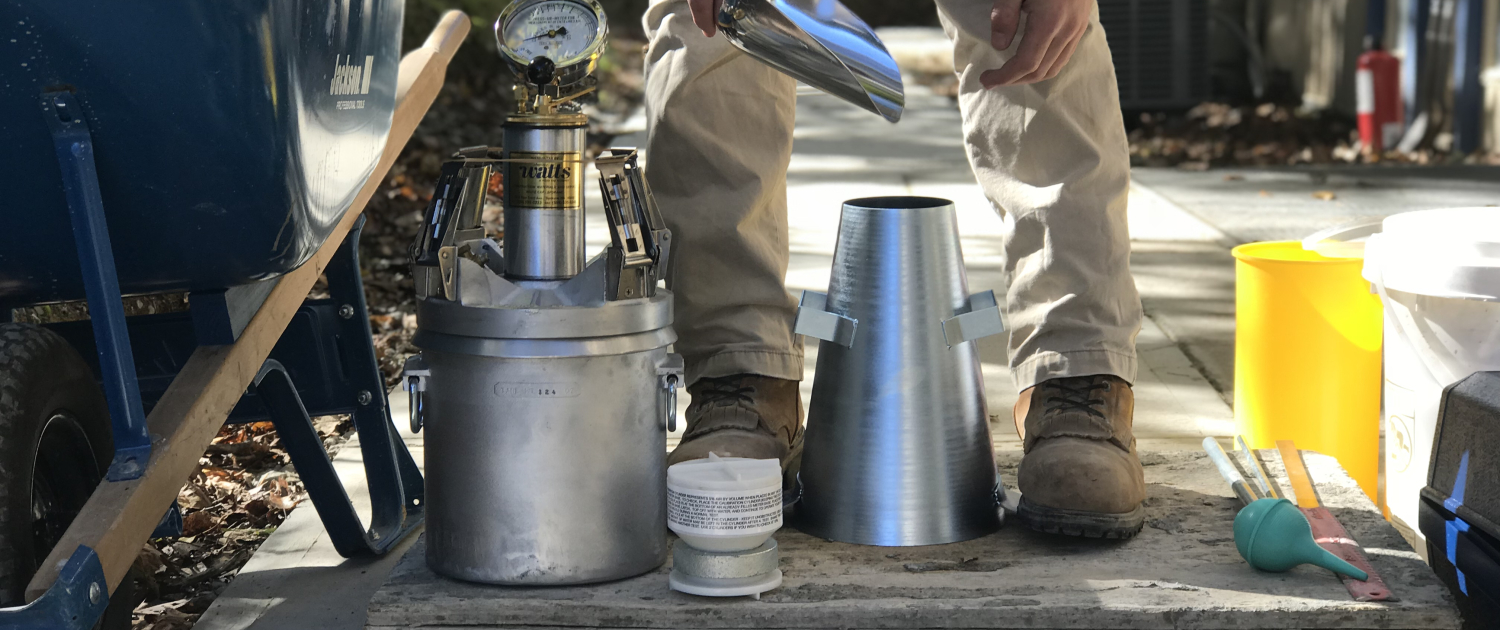
Our team delivers a full range of testing and quality assurance services for concrete, aggregates, and soils. Concrete testing capabilities include the sampling of freshly mixed concrete, slump testing, air content determination, temperature measurement, density and yield calculations, and compressive strength testing. Aggregate testing services include gradation and sieve analyses, moisture content evaluation, bulk density testing, specific gravity determination, absorption testing, and other quality control assessments. For soils, our laboratories perform moisture-density relationship testing, particle size analysis, Atterberg limits testing, soil classification, and in-place density and moisture testing using nuclear methods.

In addition to these core services, our laboratories are equipped to perform a wide variety of project-specific testing to meet the unique needs of transportation, commercial, municipal, industrial, and infrastructure projects. Our accreditation through CCRL and AASHTO reflects our commitment to producing accurate, dependable results that owners, contractors, and design professionals can trust.

At Thrasher, we understand that quality materials and verified workmanship are essential to project success. Our Construction Materials Testing professionals work alongside project teams to provide timely, reliable data that supports informed decision-making, helps maintain compliance, and keeps projects moving forward with confidence.

If you have questions about your testing requirements or would like to learn how our team can support your project, contact us to discuss your Construction Materials Testing needs.

Quality Management Systems

  • Construction Materials Testing Laboratory Quality System
  • Concrete and Aggregate Testing Laboratory Accreditation
  • Soil Testing and Inspection Agency Accreditation
  • Construction Materials Testing and Inspection Agency Accreditation

Soil Testing

  • Dry Preparation of Disturbed Soil and Soil Aggregate Samples for Test
  • Particle Size Analysis of Soils by Hydrometer
  • Moisture-Density Relations of Soils
  • Amount of Material in Soils Finer than the No. 200 (75-µm) Sieve
  • Moisture-Density Relations of Soils (Modified Proctor)
  • Laboratory Determination of Moisture Content of Soils
  • Classification of Soils for Engineering Purposes (USCS)
  • Liquid Limit of Soils
  • Plastic Limit of Soils
  • Oversize Particle Correction
  • In-Place Density and Moisture Content by Nuclear Methods

Aggregate Testing

  • Reducing Samples of Aggregate to Testing Size
  • Materials Finer than No. 200 Sieve by Washing
  • Bulk Density (Unit Weight) and Voids in Aggregate
  • Sieve Analysis of Fine and Coarse Aggregates
  • Specific Gravity and Absorption of Fine Aggregate
  • Specific Gravity and Absorption of Coarse Aggregate
  • Total Moisture Content of Aggregate by Drying
  • Bulk Density (Unit Weight) and Voids in Aggregate
  • Materials Finer than No. 200 Sieve by Washing
  • Total Moisture Content of Aggregate by Drying
  • Reducing Samples of Aggregate to Testing Size
  • Sieve Analysis of Fine and Coarse Aggregates
  • Specific Gravity and Absorption of Coarse Aggregate

Concrete Testing

  • Moist Cabinets, Moist Rooms, and Water Storage Tanks
  • Sampling Freshly Mixed Concrete
  • Making and Curing Concrete Test Specimens in the Field – Cylinders
  • Compressive Strength of Cylindrical Concrete Specimens
  • Slump of Hydraulic Cement Concrete
  • Density (Unit Weight), Yield, and Air Content of Concrete
  • Air Content of Freshly Mixed Concrete by the Pressure Method
  • Air Content of Freshly Mixed Concrete by the Volumetric Method
  • Temperature of Freshly Mixed Portland Cement Concrete
  • Making and Curing Concrete Test Specimens in the Field – Cylinders
  • Compressive Strength of Cylindrical Concrete Specimens
  • Density (Unit Weight), Yield, and Air Content of Concrete
  • Slump of Hydraulic Cement Concrete
  • Sampling Freshly Mixed Concrete
  • Air Content of Freshly Mixed Concrete by the Volumetric Method
  • Air Content of Freshly Mixed Concrete by the Pressure Method
  • Moist Cabinets, Moist Rooms, and Water Storage Tanks
  • Temperature of Freshly Mixed Portland Cement Concrete
  • Use of Unbonded Caps in Determination of Compressive Strength of Hardened Concrete Cylinders (7,000 psi and below)

Fulfilling your needs in a responsible and innovative way has earned our firm prestigious recognition throughout the Mid-Atlantic region.

Call us: 1-800-273-6541